About Us - Ish Tsadik

About Us

Ish Tzadik Haya is a registered non-profit organization (NPO) #580546158, established to provide assistance to the needy throughout Israel. The organization holds an Income Tax certificate for tax-deductible donations under Section 46 [of the Income Tax Ordinance].

To fully achieve the organization’s goals and ensure that all received donations are transferred entirely to the causes for which they were intended, all operational and administrative expenses are kept to the absolute necessary minimum. Our overhead stands at just 2.9% of our annual turnover, while the authorities allow for expenses of up to 18%. Furthermore, these operational costs are covered by specific donors who designate their contributions specifically for that purpose!
This transparency and efficiency are what set our organization apart from others.

We invite you to review our latest published annual financial report (Click Here).

The association's mission encompasses the following:
Helping the Sick
A considerable part of the association's contributions to the community involves providing assistance to the sick across two distinct spheres.
01
Help for the sick who cannot afford necessary assistive devices and medications excluded from the health basket.
02
Assistance for children with oral damage requiring rehabilitation following chemotherapy or radiation treatments.

The association focuses its aid on sick children who have not yet reached the age of 18, particularly in the area of purchasing medications proven and defined as life-saving or life-extending.

The requests received are reviewed and discussed by a special expert committee established for this matter. This committee deliberates on each individual case and determines the level of assistance, subject to the need and the association's financial capabilities.

Helping the Needy
Support for families facing domestic economic hardship is administered in two fields:
01
Assistance with acquiring the most basic essentials required for an infant, including formula and diapers.
02
Providing the needy with basic food supplies and, where necessary, financial assistance.

The aid is granted based on defined criteria and the receipt of a recommendation or report from a social worker within the local welfare authority who is familiar with the family, has visited their home, and recognizes the genuine need.

We have set a goal to fulfill the basic, existential need of feeding a hungry infant, knowing that meeting this necessity is vital for the baby's physical and emotional development and has a profound impact on their future.

Management Team
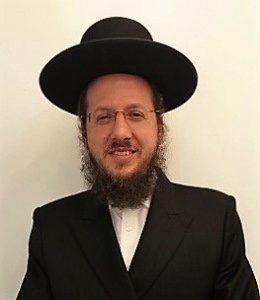
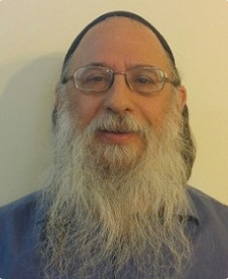
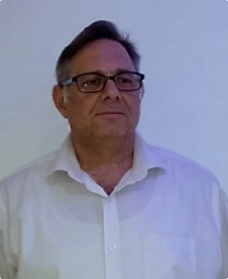
Rabbi Chaim Eideles

The Association's President

The image of our great-grandfather, Rabbi Aryeh Levin, of blessed memory, stands before our eyes, reflecting his pure desire for every Jewish soul—without any sectoral distinction—to be joyous, loved, and lovable. Having spent many years among a large populace, I have been exposed to pain and distress across all aspects of life, struggles and battles where pain is their allotted share, and the concealment of the Divine Presence is great. We established this association with the intention of giving help without reservation and without recompense: to bring spiritual and material relief, through counsel and guidance, from what God has bestowed. Our prayer is that the desires of every single heart be fulfilled for the good.

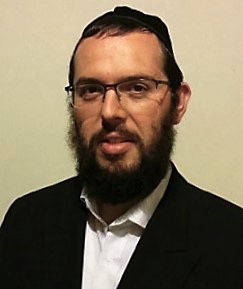
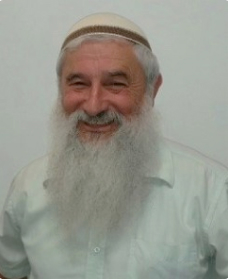
Rabbi Michael Levin

Rabbi and Educator

The continuity of Rabbi Aryeh Levin's legacy is manifest in Rabbi Chaim Eideles' work in several ways; one of them is that the Rabbi 'sees into the heart,' and this is reflected in the acts of kindness extended to all of Israel. I recognized in the association and its staff a deep, profound love for the people of Israel. The ability to give generously and respectfully, offering no room or opening for shame on the part of the recipient, is what refines this kindness. The association emphasizes the virtue of contributing with discretion—without any publicity—thereby eliminating the quid pro quo mentality.

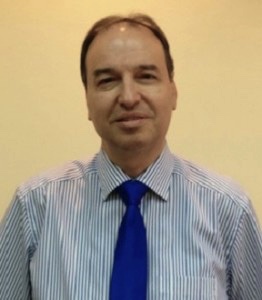
Dr. Shlomo Nass

Founding Partner and Director of Dr. Shlomo Nass & Co. He is among Israel's leading trustees and one of the country's foremost law firms. He has held, and currently holds, senior positions within the Israeli business and economic system.

In the course of our professional work, we unfortunately encounter individuals who need economic assistance (not only monetary) in various fields. The association, headed by the Rabbi, can and does provide solutions and help in these diverse areas. This blessed activity yields fruit for the needy across the entire population.

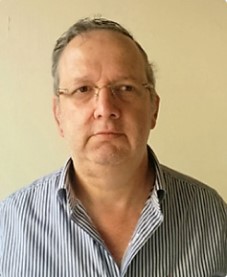
Mr. Roni Baums

Mizrahi-Tefahot Bank Ltd.

The association spreads kindness through several avenues: Torah study and acts of charity (Gemilut Chasadim). We are always delighted to see our premises filled to capacity for the fascinating Torah lessons delivered by the Rabbi.

In our acts of charity, there are several core focuses—the distribution of food for infants and various medical cases.

The association collaborates extensively with social workers across the country, utilizing their help to reach very severe cases that receive no aid from various welfare departments—the 'cases that fall through the cracks.' Furthermore, the association has established systematic screening mechanisms to ensure that donation funds provide maximum benefit to the needy who are not being assisted by other systems.

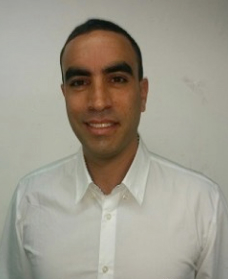
Mr. Udi Aonina

Real Estate

'Every Jew must be content with the conduct of the Almighty.' As part of the association, I found the ability and opportunity to advance this saying. I have been privileged to know several prominent activists, led by the Rabbi. The activists are incredibly diverse, coming from a very wide spectrum, and they perform their work faithfully with remarkable kindness and, of course, with discretion. The ability to give of my time whenever required is the least I can give back to society, with great joy and love.

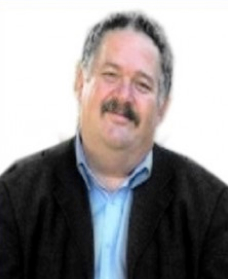
Mr. Hanan Bar Sela

Musician

The association operates under meticulous procedures, and those engaged in the work receive very strict halachic (Jewish legal) guidance from Rabbi Chaim Eideles, Shlit"a.

The unique feature of the association is the donors' certainty and confidence that the full amount (100%) of their funds reaches the needy.

Furthermore, the halachic principle that one does not transfer funds from one charitable cause to another is well known. A person who has donated his money for the 'infant project' will not have it used for welfare cases or sick individuals who require immediate assistance. Every person has a natural inclination toward a certain type of charity, and therefore, the spirit of the Halacha is uneasy with diverting their money to another important need. 'The world is built with kindness' (a quote from Psalms).

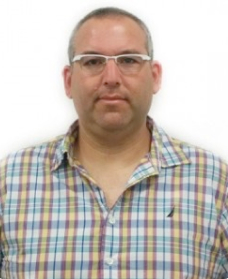
Mr. Roey Shtern

Earthworks Contractor

'Love your neighbor as yourself'... Deserving individuals should live with dignity in our society—to ensure their infants are nourished from birth for their growth, motor, and intellectual development. It is important that people grow up under proper conditions, from the stage of infancy: with food, respectable clothing, smiles, and joy, and be happy under a suitable roof. The well-being of families is the mirror of society, and the more we assist them from birth, the more we enable them to integrate into society in a humane manner.

Mr. David Shirel

Educational Director

The association, named after the righteous Rabbi Aryeh Levin, of blessed memory, was not established merely in his memory and for the elevation of his soul, but operates as a direct continuation of his path.

Rabbi Chaim Eideles, Shlit"a, who continues his way, acts to spread the light of the Torah to the masses, engaging day and night in counseling, guidance, and help, both spiritually and materially, with joy and unconditional love.

For everyone.

'Aryeh Levin' (אריה לוין) = 312 = Light for Jews (אור ליהודים) = Every Person is a Full World (כל אדם עולם מלא) = Great with Small (גדול עם קטן).

Mr. Israel Orlan

CEO of the Association - Lieutenant Colonel (Res.), MBA (Master of Business Administration), B.Sc. (Bachelor of Science) in Electro-Optics.

After many years of work in the field of the security of the People and the Land, I reached a decision that there is a place to change direction and begin engaging in the unity and wholeness of the People, concerning everything related to 'One helps his friend, and to his brother, he says, 'Be strong.' [Isaiah 41:6]

The resilience of the People is measured by mutual support, by the desire and readiness of everyone to act for the sake of the collective. In the course of my activities, I have encountered affluent people who became needy overnight, after tragically contracting an illness. There is no guarantee for anyone, and therefore we all must mobilize and support everyone in need to the best of our ability. We pray and hope that we will never find ourselves in that position.

Mr. Tuvia Mermelstein

Founder and Director – Alei Bodek Company

'The Lord supports all who fall, and straightens all who are bent.' [Psalms 145:14]

The members of the association are true people of action, and under the Rabbi's leadership, they succeed in bringing forth genuine and practical kindness. All those engaged in this work are unique by virtue of the light and kindness they bring into the world.

I have no doubt that all charities spread true and pure goodness, but we have entered a place where there is no one else. This is what guides us: 'In a place where there is no man, strive to be a man.'

Help Those in Need

Donate now to the association's work and support families in need.

Baby food and diapers from needy families
Assistance to patients
Financial assistance for families the needy and the elderly
In memory of and inspired by Rabbi Aryeh Levin

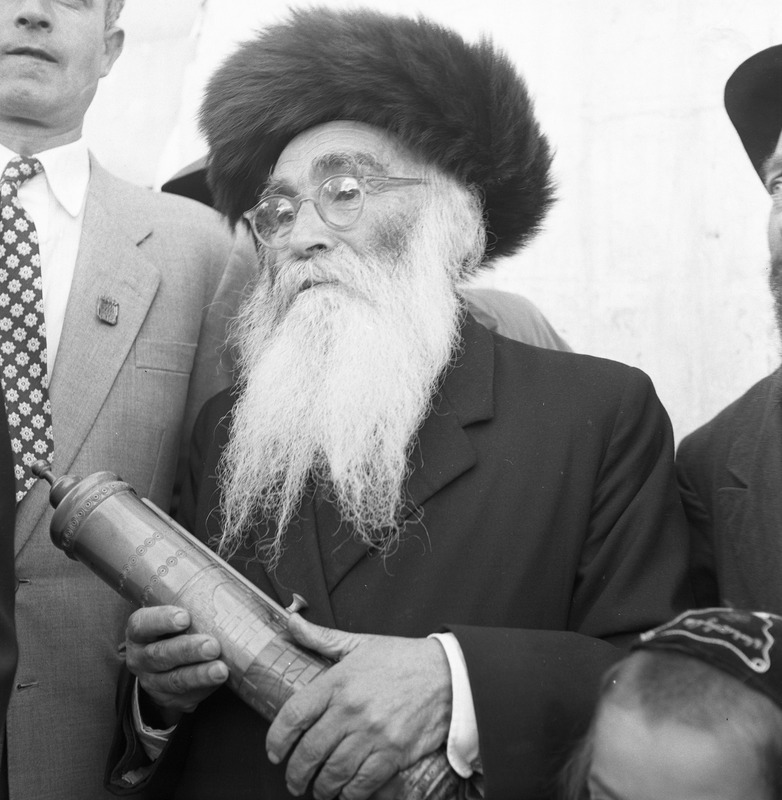
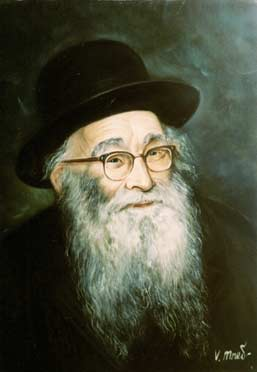
Rabbi Aryeh Levin was born on the 6th of Nisan, 5645 (1885), in Orla, a town near Bialystok in White Russia, as the youngest son of his father, Rabbi Binyamin Beinush, who was a forester and a scholar, and his mother, Ettel. Already in his youth, he left home and went into exile for a place of Torah study. He wandered from Yeshiva to Yeshiva, studying in Brisk and Pinsk, and became known as a diligent student and a prodigy. At a certain point, he decided to turn his steps toward the famous Volozhin Yeshiva, but he was not accepted due to his young age. Rabbi Aryeh continued his wanderings in search of a place of Torah study and reached Minsk; from there, he traveled to the Slutsk Yeshiva and studied under the preeminent Rabbi Isser Zalman Meltzer. After several years, in the year 5661 (1901), he moved to study for one year in Hlusk, and after that year, he turned again to the Volozhin Yeshiva, and this time he was accepted as a student and received a stipend that enabled him to study.

In the Volozhin Yeshiva, the desire to immigrate to the Land of Israel awoke within Rabbi Aryeh, and he wrote: "In those days, the clouds of war gathered, the war between Russia and Japan, and the decision matured in my heart to go out and fulfill my concealed heart’s yearning, my childhood desire—to ascend to the Holy Land, and I was then about 19 years old."

After many hardships, raising the necessary money for the immigration and the required documents, and after a final farewell to his parents in Orla, Rabbi Aryeh arrived in the Land of Israel in the month of Adar, 5665 (1905). About this, he writes: "...And behold, upon seeing the Holy Land from afar, which the Almighty swore to our forefathers to give us, I became a completely different person. I was shaken by a terrifying emotion due to the great joy, and my eyes streamed with tears. I thought, let me die this time, as the Blessed Name has granted me the merit to enter the land of my ancestors. I forgot all the suffering, and it was as if another spirit entered me, a spirit of endless joy and spiritual delight. My eyes streamed with unceasing tears because, through the mercies of Heaven, I merited entering the Holy Land, may it be built and established, which the dwellers of the heavens and earth long to see. I descended onto the shore and stepped upon the Holy Land, feeling with every single step that I was treading with my foot on the Holy Land..."

A few months after his arrival in the Land of Israel, on the 11th of Tammuz, Rabbi Aryeh married Hannah, the daughter of Rabbi David Shapiro, the brother-in-law of Rabbi Tzvi Pesach Frank. Rabbi Aryeh settled in Jerusalem, studied at the 'Torat Chaim' Yeshiva, and in the year 5669 (1909), he was ordained as a Rabbi by the esteemed Rabbis: Rabbi Chaim Berlin (son of the Netziv of Volozhin), Rabbi Shmuel Salant, and Rabbi Abraham Isaac HaCohen Kook, whose souls were deeply bonded with his. From the year 5677 (1917) until the end of his days, he served as the spiritual supervisor (Mashgiach Ruchani) at the Talmud Torah adjacent to the Etz Chaim Yeshiva in Jerusalem.

Rabbi Aryeh was called 'Reb Aryeh' by everyone and was known by his moniker, “The Rabbi of the Prisoners,” because he habitually went to the inmates in the prisons for about twenty-five years during the British Mandate period, encouraging their spirit and writing letters to them. His visits to the underground prisoners and those executed on the gallows were especially renowned. Reb Aryeh also regularly visited the leper hospital to encourage its residents. When asked why Rabbi Kook, of blessed memory, specifically recommended Rabbi Aryeh to the prison authorities to be the Rabbi of the prisoners, he replied: "Rabbi Aryeh possesses the quality of performing physical acts of kindness (Gomel Chesed B’Guffo), and herein lies the secret of his soul and his rectification in the world." Rabbi Kook also said of him: "If there were three Jews like Rabbi Aryeh in our generation, the Messiah would come..."

His good character traits, humility, love for all of God's creatures, and the acts of kindness he performed with every person in need were famous in Jerusalem. He lived modestly and under poor conditions, refusing every offer from his admirers to improve his living situation. He once told a friend during a funeral in Sanhedria: "Many times they tried to persuade me to move my apartment to a more spacious place, and I refused. Go and see: after a long life, a person is brought from his apartment to here [the cemetery]. For me, the transition will not be difficult, because from my room to here there is no sharp contrast..."

His face shone especially when he met children. Once, when he left his home, Rabbi Aryeh approached the children and stroked their faces with paternal affection, saying to his escort: "If it is a mitzvah (commandment) to desire and favor the stones and dust of the Land of Israel, as the verse in Psalms states: 'For Your servants cherish her stones and favor her dust,' then it is all the more so concerning the children of Israel in the Land of Israel..."

Many stories were connected to the Jerusalemite righteous man, Rabbi Aryeh Levin, and were extensively recounted in two books by the author Simcha Raz: Ish Tzadik Haya ('He Was a Righteous Man') and Tzadik Yesod Olam ('Righteous Foundation of the World'). The book includes a story that occurred a few hours before Rabbi Aryeh's passing. When the journalist Eliyahu Amikam approached him, Rabbi Aryeh pointed to the Book of Psalms in his hand, and to the verses: "He will save Zion and build the cities of Judah... and those who love His name shall dwell there." Rabbi Aryeh explained: "First, 'He will save Zion'—first came the Biluim [early pioneers] and then their successors. Now we are in the second stage—we must build the cities of Judah, and only then will the third period arrive—the love of God... That period too will come..."

The numerous stories about him overshadowed another facet of his personality: Rabbi Aryeh was a profound Torah scholar with a huge and extensive scope of knowledge, and a trusted confidant of the great sages of Israel who held him in great esteem and respect. Throughout his life, he did everything to hide and conceal his greatness, but in his will to his descendants, he guides them in the ways of life, revealing a little of his inner world so that his words would be accepted by their hearts, and asks them to follow the paths he paved, sometimes through devotion and sacrifice of all he owned for the sake of others.

Rabbi Aryeh embodied the concept of "Fleeing from honor" and did so with all his might. When they wanted to grant him the title of Worthy Citizen of Jerusalem (Yakir Yerushalayim)—he refused. Many good people pleaded with him to agree, but he refused and did not give a reason. "I saw and considered that it is not worthwhile to strive to obtain a position or to force the time. For you will be called by your name and seated in your place. And from your own [portion] will they give you..."

Once, he was asked about the matter, and in a moment of candid disclosure, he answered: "One does not open a window in a dark house." (Meaning that when the house is dark, its deficiencies cannot be seen, as it is dark inside. But when the window is opened and the light comes in, all the deficiencies will be revealed...) Such was Rabbi Aryeh in his humility and discretion; he was sure he was unworthy, and on the contrary, the honor would only expose his shortcomings to the public.

"I always strove to be among those who are insulted but do not insult, who hear their disgrace but do not reply, and immediately I prayed that no one would be punished because of me..."

The preeminent Rabbi Zilberstein, Shlit"a, the husband of his granddaughter, related: "Once, while the Rabbi was giving a lesson, President Zalman Shazar, of blessed memory, arrived and asked to speak with him. When his messenger entered and delivered the request, the Rabbi replied: 'I am currently engaged in Torah study. If the matter is one that supersedes Torah study, I am willing, but if not, please postpone the meeting until tomorrow.' And indeed, the President left, and the next day the following story came to light: Because there was a ceremony for the pardoning of prisoners, in which the Chief Justice of the Supreme Court of the United States participated, he turned to one of the prisoners and asked him: 'Will you continue to steal in the future?' The prisoner thought for a moment and answered: 'Only one thing (or one time). I need to 'obtain' a watch for Rabbi Levin, because he does not have one!' To the guest's astonishment, the prisoner explained that Rabbi Aryeh Levin had taught them in prison about the virtue of truth, and his words had so penetrated his heart that he had resolved not to steal anymore to avoid the lies stemming from concealing and denying the act, and thus he could no longer steal. But he so deeply valued and admired Rabbi Levin that he wanted to give him a wristwatch, which the Rabbi lacked. The guest was so impressed by the story that he requested to meet Rabbi Levin. He accompanied President Shazar to meet the Rabbi, and because the matter did not justify interrupting the Torah study, the President postponed the visit until the next day!

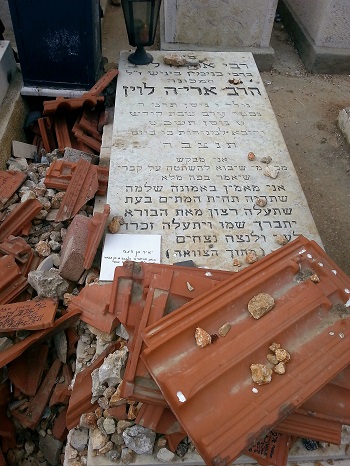
Rabbi Aryeh Levin passed away on the 9th of Nisan, 5729 (1969), and was buried in the Sanhedria cemetery next to his wife's grave. Even in his will, Rabbi Aryeh continued to care for the entire people of Israel: "All those to whom I was connected in my life, especially those who drew close to me in closeness to God and whose distress and suffering I felt, I will not forget them, if I have any merit after twelve months to ask for mercy before the Throne of Glory..."